
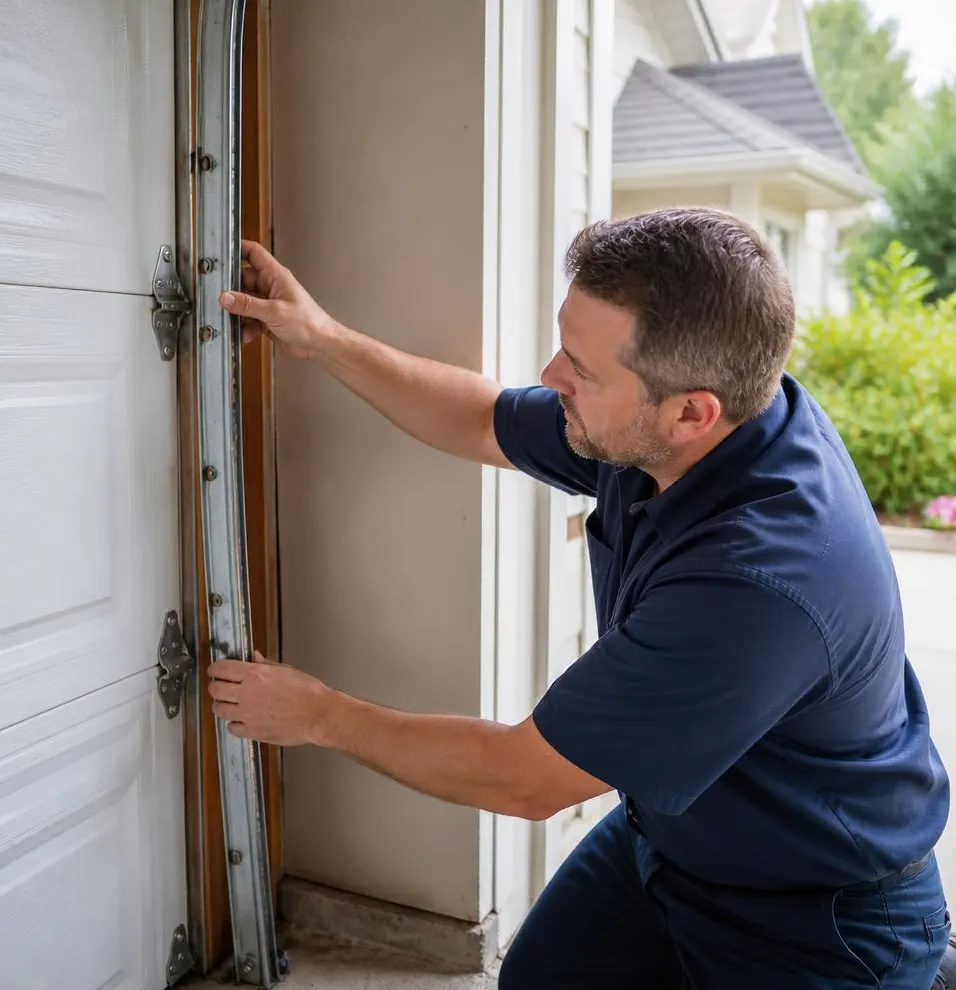
What a Tech Sees on This Call
The call usually starts the same way: someone noticed daylight around the bottom of the garage door, or the laundry room next to the garage never quite feels right no matter what the thermostat says. On the inspection, it's almost always one of the same things — the rubber seal along the bottom of the door is cracked and flattened from years of summer heat, the weatherstripping along the sides and top has pulled away or gone brittle, or there's a visible gap at one or both bottom corners where the concrete has settled slightly and the door no longer sits flush. Sometimes there's no insulation in the door panels at all, just a sheet of steel between the garage and the outside air.
None of this is dramatic. It's not a safety issue and the door still opens and closes fine. But it explains a lot about why one side of the house runs warmer in July and why the AC seems to run longer than it should.
Why a Garage Door Gap Touches Your Thermostat
An attached garage isn't sealed off from the rest of the house the way most people assume. It usually shares at least one wall with living space, and often there's a room above it, ductwork running through it, or a water heater and AC closet inside it. When the garage door leaks air, the garage itself heats up fast in the summer — on a hot Houston afternoon, an unsealed garage can sit well above outdoor temperature just from trapped heat and sun load on the door. That heat pushes through the shared wall, warms the ductwork if any runs through the garage, and raises the temperature in the rooms next to or above it. The AC compensates by running longer, even though the thermostat is in a different room entirely.
It works the same way in reverse during the rare cold snaps or ice events in winter, just with less intensity and for fewer days a year here.
The Three Gaps That Actually Matter
- Bottom seal: This is the long rubber strip along the floor. Hail, hot pavement, and years of UV exposure crack and flatten it. A flattened seal can leave a gap you could slide a pencil under.
- Side and top weatherstripping: The strips along the door frame. These dry out and shrink faster in direct sun, which matters on south- and west-facing garages that take the brunt of Houston's afternoon heat.
- Panel seams and windows: Older doors or ones with decorative windows often have thinner insulation or none, so even with good seals the door itself still transfers heat.
A Quick Test You Can Run Tonight
Close the garage door, turn off the lights inside, and have someone stand outside with a flashlight while you stay in. Run the light slowly along the bottom and sides of the door. Any light that shows through is air getting through too. For the bottom seal specifically, try sliding a dollar bill under the door from outside with the door closed — if it slides through without resistance in multiple spots, the seal isn't doing its job.
What Actually Fixes It — and What Doesn't
Replacing a cracked bottom seal is usually a simple, low-cost fix and the first thing worth doing. Side and top weatherstripping is similarly inexpensive and makes a noticeable difference in how much outside air and dust gets into the garage. If the door itself has no insulation, adding seals alone will help but won't fully solve the heat transfer through the steel — at that point the honest trade-off is between retrofitting insulation panels or planning for an insulated door at the next replacement. Spray foam or kits glued to an old door can shift slightly over time in extreme heat, so they're a partial fix, not a permanent one.
When It's Not the Door
In fairness to whichever spouse is arguing the other side: a leaky garage door is rarely the only culprit. If there's an attic access panel in the garage ceiling, that's often a bigger leak point than the door. Ductwork running through an unconditioned garage with disconnected or crushed insulation can cause the same symptoms. A fair test is to fix the door seals first, since it's the cheapest step, and see how much the problem actually improves before blaming (or clearing) the door entirely.
When to Call Houston Garage Door
If the flashlight test shows daylight all the way around, or the bottom seal is cracked and brittle, that's a straightforward fix under our Garage Door Maintenance service — seals, weatherstripping, and a check of the door's alignment so it's actually sitting flush on the slab. If the door is older, uninsulated, and the gaps keep coming back no matter what's replaced, it's worth a conversation about Garage Door Installation with an insulated model built for Houston's heat and storm swings.
If your garage runs hot, your utility bills don't add up, or you just want someone to settle the argument for good, call Houston Garage Door. We serve Houston, Katy, Sugar Land, Bellaire, Missouri City, Pearland, Spring, and Cypress, and we can usually get someone out the same day.